
Enhancing Comprehensive Governance and Data Integration: Transparency Commission Receives a High-Level Delegation from the General Authority for Monitoring the Allocation of Federal Revenues
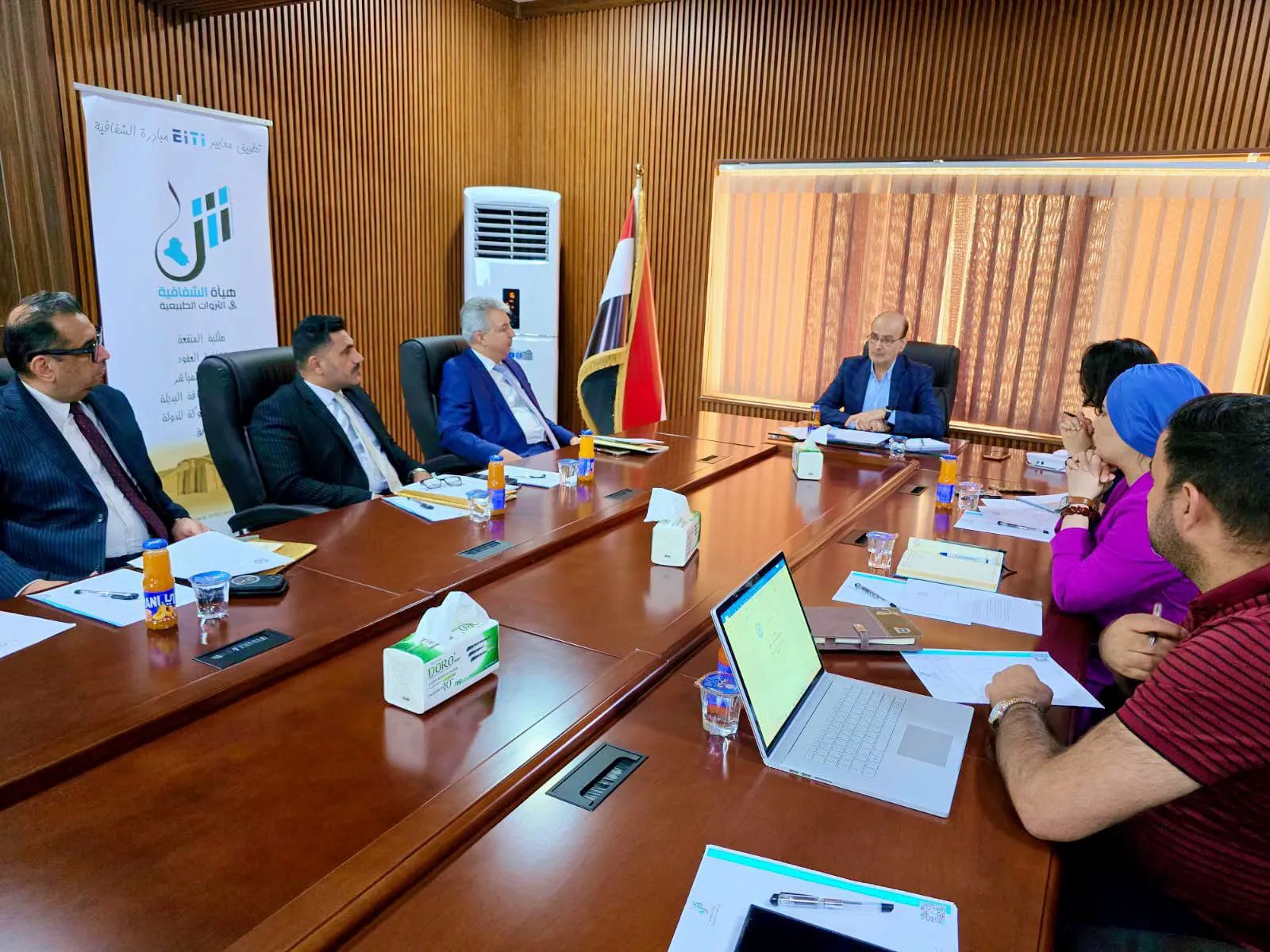
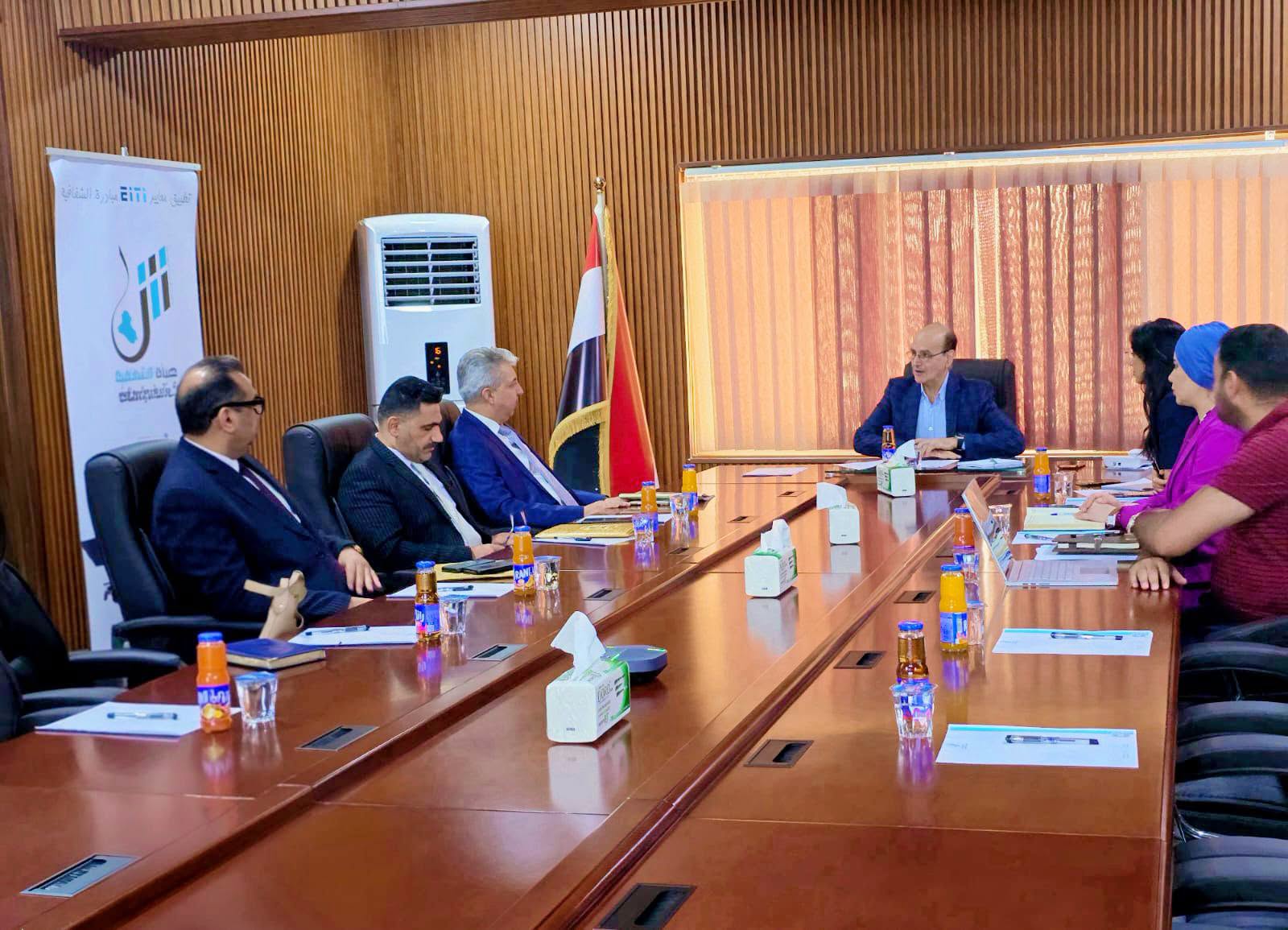
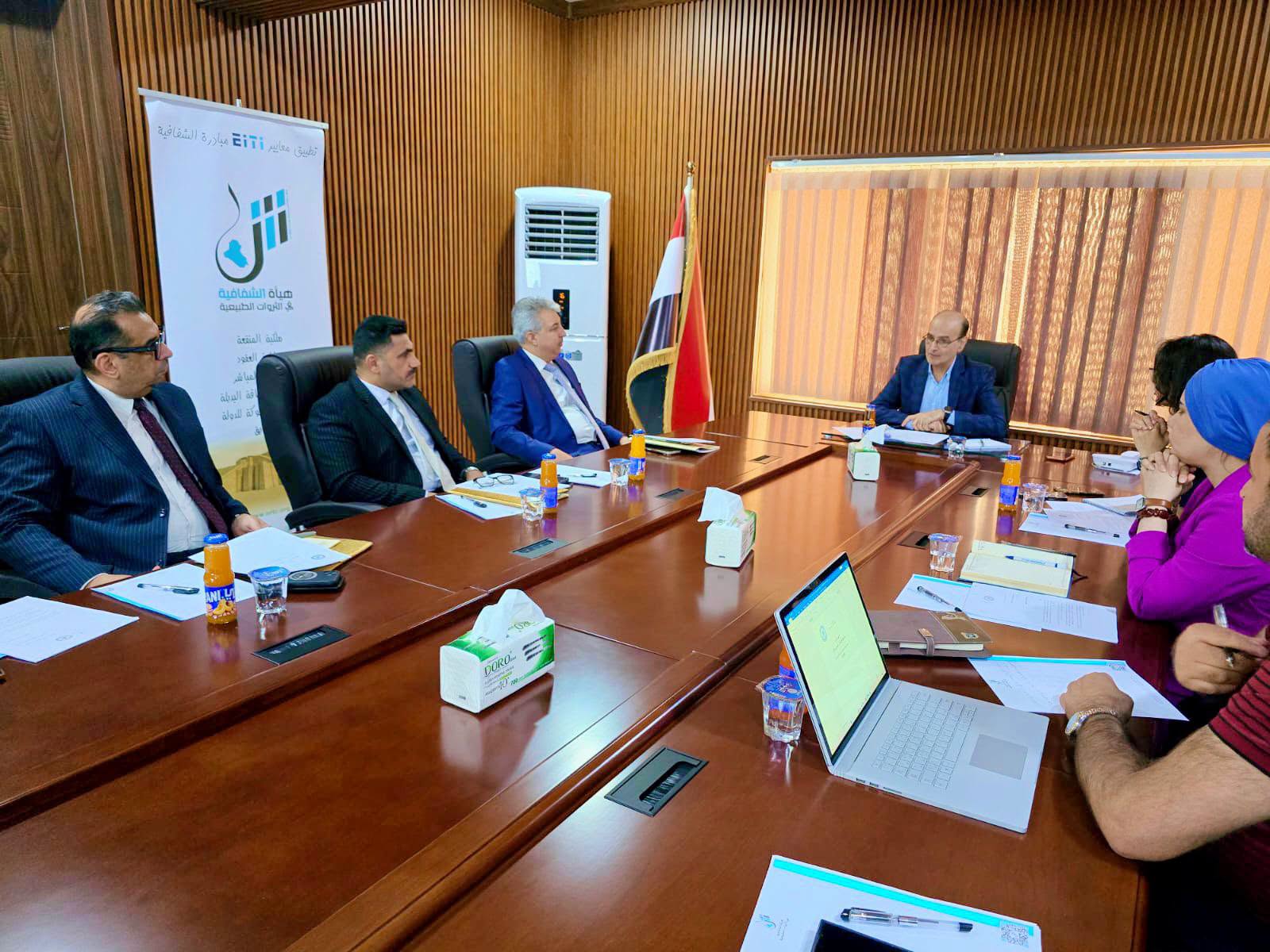
On Tuesday, August 11, 2026, the Executive Director of the Transparency Commission, Mr. Alaa Rasool Mohie El-Din, received a high-level delegation from the General Authority for Monitoring the Allocation of Federal Revenues. The visiting delegation was headed by the Advisor to the Authority’s Head, Dr. Ibrahim Al-Zubaidi, alongside the Director General of the Technical Affairs and Follow-up Department, Mr. Zaid Khalil Al-Asadi, and senior staff members.
At the beginning of the meeting, Executive Director Mr. Alaa Rasool delivered a comprehensive presentation on the Transparency Commission's pivotal role in fulfilling Iraq’s international commitments under the Extractive Industries Transparency Initiative ($EITI$). He emphasized that the Commission directly aims to govern the oil, gas, and mineral sectors, ensuring that financial revenues are utilized to foster economic growth and improve citizens' living standards.
The Executive Director outlined the Commission's key operational pillars, which include:
Disclosure and Publication of Financial and Operational Data: Collecting and reconciling data on oil and production payments submitted by extractive companies (both state-owned and foreign) with actual revenues received by the government.
Annual Reporting: Issuing comprehensive yearly reports to inform the Iraqi public about the volume of extracted resources and their expenditure avenues, thereby strengthening accountability.
Export Transparency: Providing accurate and transparent daily data on production, export movements, and oil/gas revenues.
Combating Corruption and Financial Waste: Promoting good governance and embedding international transparency standards into the contracts and operational processes of the Iraqi Ministry of Oil and its affiliates to mitigate corruption risks and smuggling.
For his part, Dr. Ibrahim Al-Zubaidi, Advisor to the Head of the General Authority for Monitoring the Allocation of Federal Revenues, provided a detailed overview of their mandate. He highlighted their role in supporting government institutions—from funding allocation to spending oversight—as well as tracking federal budget allocations to guarantee equitable distribution among governorates and pursuing strategies to maximize non-oil revenues.
During the meeting, both parties discussed mechanisms to strengthen governance framework by establishing a data-sharing pipeline. This will focus on providing the General Authority for Monitoring the Allocation of Federal Revenues with detailed data on natural resource extraction, exports, and generated revenues.
This joint cooperation aims to enable the visiting Authority to reconcile these indicators with federal revenue distribution mechanisms, ensuring that financial entitlements reach all governorates and regions in accordance with fair legal percentages. Both sides concluded by affirming that this data-integration step will eliminate bureaucracy, uphold international integrity standards, and empower regulatory bodies to detect any financial deviations swiftly and accurately.