
Najaf Gas Depot Commences Trial Operations; Daily Cylinder Production Rises to 30,000
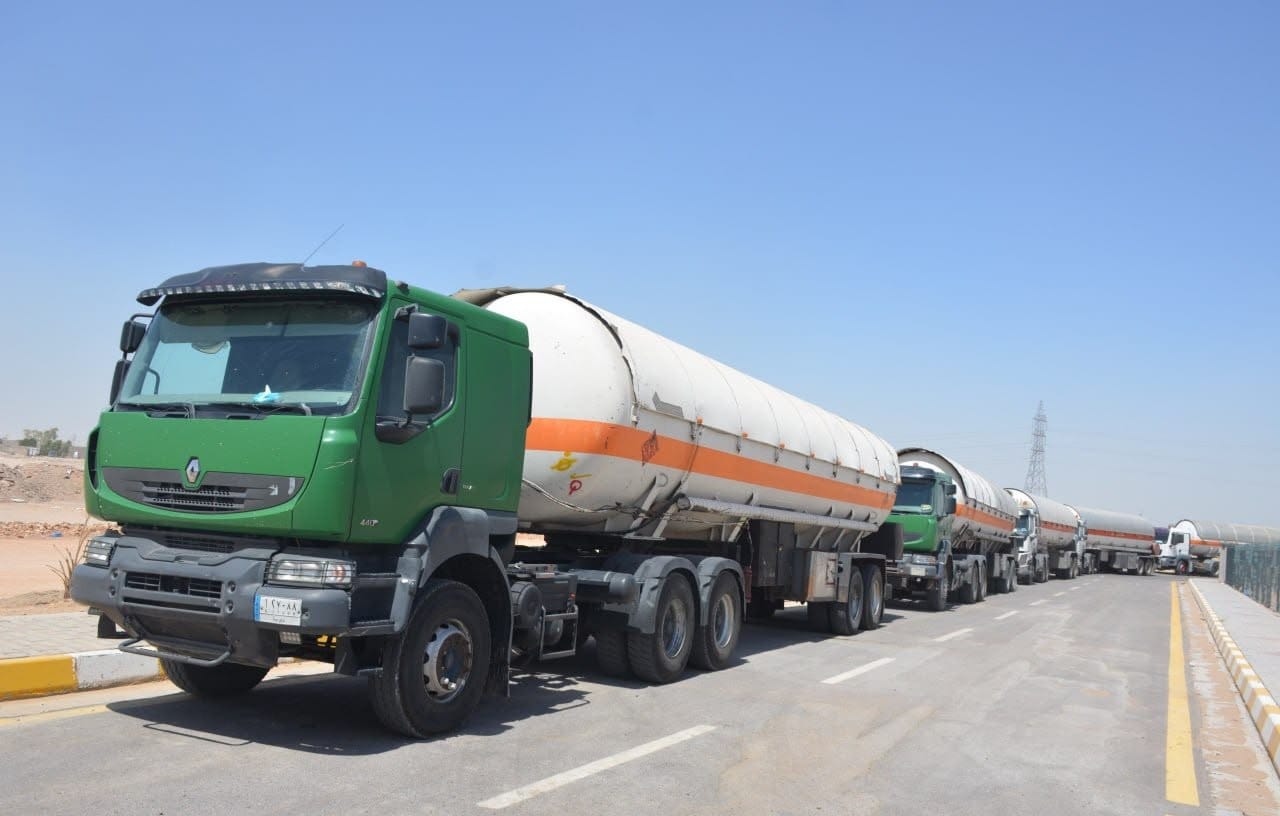
The Ministry of Oil announced on Monday, August 3, the commencement of trial operations at the Najaf Gas Depot, featuring a storage capacity of 3,000 cubic meters. The initiative aims to enhance the strategic reserve and upgrade the liquid petroleum gas (LPG) transport, storage, and distribution system.
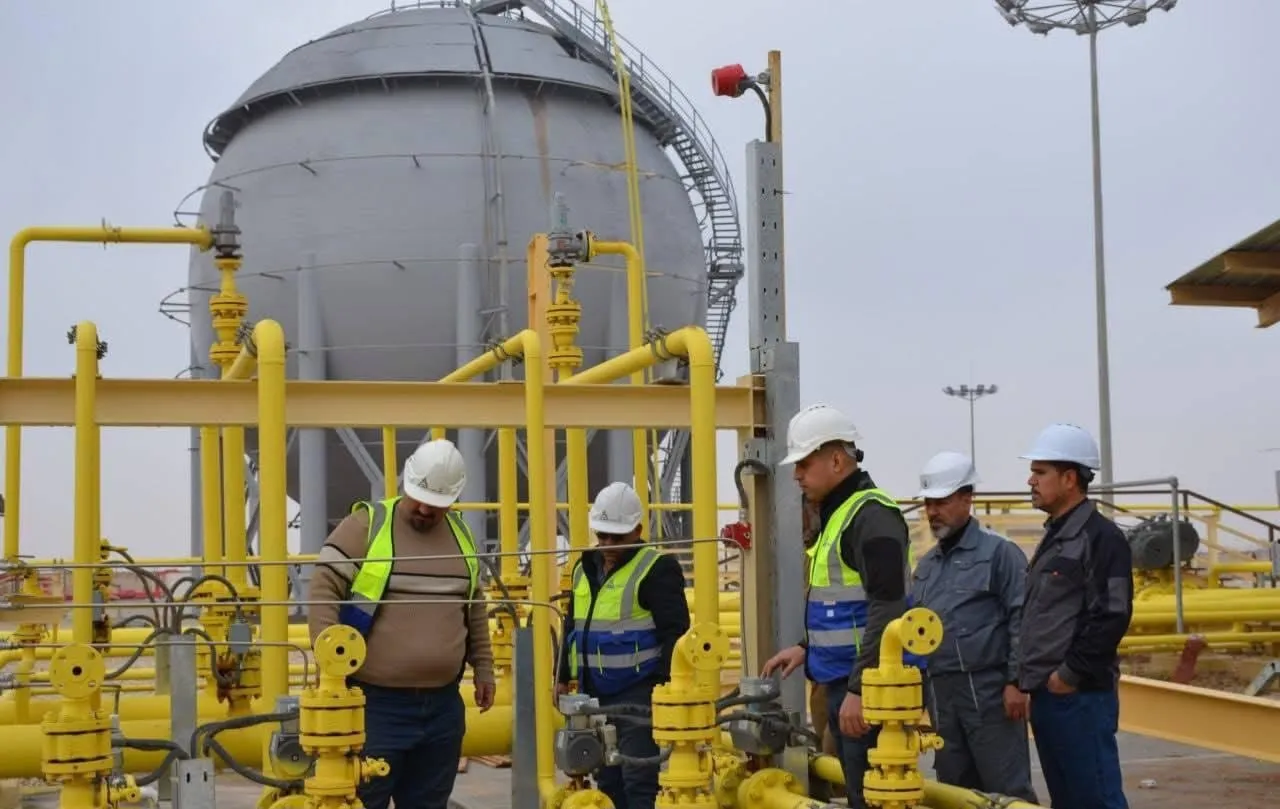
Zaid Al-Mousawi, Head of Public Relations and Media at the Najaf Gas Filling and Services Branch, stated in an interview with Al-Mada that the depot serves as a strategic reserve for Najaf Governorate. It includes a spherical LPG storage tank with a capacity of 3,000 cubic meters—equivalent to approximately 1,370 tons—which supplies domestic gas cylinder filling plants as well as vehicle conversion stations operating on LPG systems as an alternative to gasoline.
Al-Mousawi clarified that compressed natural gas (CNG) differs from liquefied petroleum gas (LPG), noting that CNG is a separate type used for different applications.
He emphasized that the depot constitutes a vital strategic reserve for Najaf Governorate, capable of covering local needs for approximately two weeks in the event of supply disruptions or emergencies—similar to challenges experienced in the past—noting that this timeframe is an estimate.
The depot supplies 13 gas filling facilities across Najaf Governorate responsible for producing domestic LPG cylinders, comprising 2 state-owned plants and 11 private-sector facilities.
Al-Mousawi noted that Najaf previously lacked its own dedicated gas storage facility and relied on receiving LPG supplies from depots in Diwaniyah and Hilla. Under the new arrangement, the Najaf depot handles local distribution directly to filling facilities and fueling stations equipped with LPG vehicle dispensers.
The facility is located along the Najaf–Karbala highway near pole number 200.
Regarding production capacity, Al-Mousawi explained that under standard operating conditions, the 13 filling facilities produce approximately 22,000 cylinders daily, which fully meets the governorate’s routine demand. Individual plant outputs vary according to capacity, ranging from over 500 cylinders per day up to 2,000 cylinders per day.
During peak religious pilgrimage seasons, demand rises substantially, prompting facilities to boost total output to around 30,000 cylinders per day—an increase of 5,000 to 8,000 cylinders over baseline operations.